A Murphy Bed is a type of bed designed to be folded up into a wall or closet for storage when not in use. Because they don’t take up much space, Murphy Beds are popular among those who live in small homes, apartments and college dormitories.
The Murphy Bed was invented in the early 1900s. Its inventor was looking for a way to create more space in his small apartment and came up with the idea for a bed that could be folded into the wall. The first Murphy Bed was made out of wood and had a metal frame that could be pulled down from the wall.
Who Invented the Murphy Bed?
Irish immigrant William Lawrence Murphy invented the bed in the early 1900s while living in San Francisco and courting a young opera singer.
At that time, it wasn’t considered “proper” for a woman to enter a man’s bedroom, so he designed his bed to fold up and store in his closet. This allowed him to immediately convert his studio from a bedroom into a parlor.
Murphy went on to form the Murphy Bed Company. He patented his invention, the In-A-Door bed, in 1908. He never trademarked the name “Murphy Bed.”
Today, Murphy Beds are making a comeback as more and more people are looking for ways to maximize their living space.
The beds are perfect for small apartments, home offices and guest rooms. There are many different companies that offer Murphy Beds, and you can even find them in certain furniture stores.
Why Is It Called a Murphy Bed?
The Murphy Bed is named after its above-mentioned designer, William Lawrence Murphy. Murphy was an American inventor and businessman who lived in San Francisco in the late 19th and early 20th centuries.
Murphy was born in 1876 near California’s Central Valley to a 49’er gold rush prospector. Prior to moving to San Francisco in his early 20s, he held a range of jobs, including horse-breaker, sheriff and stagecoach driver.
Murphy, who was both driven and resourceful, built a foldaway bed using door hinges and a closet doorjamb. This allowed the bed to be concealed inside his closet, which quickly and easily transformed his tiny room from a bedroom to a parlor. The couple married in the early 1900s.
The popularity of Murphy Beds dipped around the Great Depression and further declined until long after World War II. Even when metal and raw materials became available again, foldaway beds did not regain their place in mainstream society until people began moving into smaller living spaces during the economic challenges of the 1970s.
When Was the Murphy Bed Popular?
Murphy Beds peaked in popularity in 1925 after the company moved its corporate headquarters to New York City. At the time, owning a Murphy Bed was seen as a status symbol. People would move into luxury hotels in New York and their suite would include a Murphy Bed, allowing them to store the bed and have a parlor.
Advertisements for apartments in newspapers used the Murphy Bed as a selling point throughout the 1920s. The Murphy Bed Company was manufacturing more than 100 thousand Murphy Beds at the time.
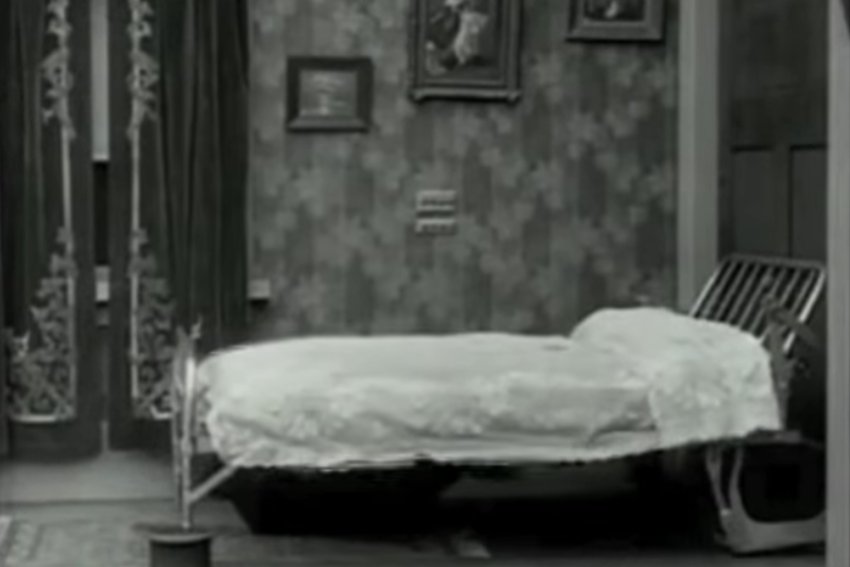
Murphy Beds were frequently used for scenes in early cinema, including in silent films. The earliest movie to use a Murphy Bed is the lost 1900 film A Bulletproof Bed.
One of the most famous examples of a Murphy Bed in cinema was Charlie Chaplin’s 1916 film, One A.M. In the scene, Chaplin struggles with the bed, and he ultimately resigns himself to sleeping in a bathtub.
How Has the Murphy Bed Design Changed Over the Years?
Unlike most traditional beds, Murphy Beds do not feature box springs. Rather, the mattress rests on a platform or mesh material and is held there to prevent sagging when closed. The mattress is also connected to the bed frame, which includes elastic straps to keep it steady and secure when the bed is folded up.
Following the first model’s release, new variations have included side-mounted Murphy Beds, bunk beds, and options with multiple functions. For example, many people buy Murphy Beds that come with a fold-down table or desk. Some models even include features such as a sofa, TV cabinet and shelving add-ons.
Are Murphy Beds Still Sold Today?
Murphy Beds experienced resurgence in popularity in the last few years, because the price of real estate has gone up and people are living in smaller homes.
Recent Murphy Bed units have included lighting, storage options and office components.
While the earliest Murphy Beds were permanently installed in closets, contemporary Murphy Beds — also referred to as Wall Beds — are attached directly to any wall.
They are portable and can be moved without difficulty to another room or another house. They can be tailored to include side cabinets, closets, lighting, and other features. They are a great option for those looking to save space in their living area.
Murphy Beds offer a number of benefits that make them a great option for small spaces. First, they save space by folding up against the wall when not in use.
This means that you can have a bedroom and an office – or any other combination of rooms – in the same space. Second, they are very strong and can support plenty of weight. This makes them ideal for use in guest rooms or as a temporary bed for children.
Third, they are relatively inexpensive compared to other types of beds. Finally, they are easy to install.